নিউরোট্র্যান্সমিটার
Neurotransmitter
স্নায়ুকোষসমূহের ভিতরে তথ্যবহন এবং গুণগতমানের পরিবর্তনকারী রাসায়নিক তরলসমূহকে একত্রে নিউরোট্রান্সমিটার
বলা হয়।
এরা স্নায়ুকোষের এ্যাক্সিনের প্রান্তদেশে ছোটো থলিতে জমা হয় এবং স্নায়ুকোষসমূহের
মধ্যবর্তী ফাঁকা জায়গা বা সিন্যাপ্সের মধ্য দিয়ে অপর
স্নায়ুকোষের ডেন্ড্রাইড
প্রান্তে তথ্যসঙ্কেতকে সঞ্চালিত করে। উল্লেখ্য, ১৯২১ খ্রিষ্টাব্দে অষ্ট্রিয়ার বিজ্ঞানী ওটো লোয়েউই প্রথম
নিউরোট্র্যান্সমিটার আবিষ্কার করেন।
একটি স্নায়ুকোষ থেকে অন্য স্নায়ুকোষে তথ্য সঞ্চালিত হয়, নিউরোট্র্যান্সমিটারের মাধ্যমে। এর পিছনে সক্রিয় থাকে বিশেষ ধরনের প্রোটিন অণু। জৈবরসায়নের পরিভাষায় একে বলা হয় রিসেপ্টর (Receptor)। রিসেপ্টর সার্বিক কার্যক্রমকে তিনটি ভাগে ভাগ করা হয়। এই তিনটি কার্যক্রম হলো-
সঙ্কেত সঞ্চালন: একটি স্নায়ুকোষ থেকে তথ্যসঙ্কেতকে অন্য একটি স্নায়ুকোষে প্রেরণ করা।
সঙ্কেতমান বৃদ্ধিকরণ: তথ্য সঞ্চালনের সময় তথ্যসঙ্কেত সবল করা।
সঙ্কেত সমন্বয়করণ: অন্য স্নায়ুকোষ থেকে প্রাপ্তসমূহক সমন্বিত করে, পরবর্তী স্নায়ুকোষে প্রেরণের পথ নির্দেশ করা।
কার্যকারণের বিচারে রিসেপ্টর নানা ধরনের হতে পারে। এদের ভিতরে ৪টি ধরণকে প্রধান ধরণ হিসেবে বিবেচনা করা হয়।
১. আয়োনোট্রোপিক রিসেপ্টর (ionotropic receptor): ট্রান্সমেম্ব্রান আয়োন-চ্যানেল প্রোটিনের একটি গ্রুপ। এই রিসেপ্টরগুলো Na+, K+, Ca2+, বা Cl− আয়োনসমূহকে উন্মুক্ত করে দেয়। প্রিসিন্যাপটিক নিউরোন তথা, তথ্য প্রদানকারী স্নানুকোষ তার সিন্যাপ্টিক ভেসিকেল থেকে নির্গত নিউরোট্রান্সমিটার এবং উল্লিখিত আয়োনগুলো আবদ্ধ হয়।
২. মেটাবোট্রোপিক রিসেপ্টর (Metabotropic receptor): এই রিসেপ্টরগুলো সাত ধরণের ট্রান্সমেম্ব্রেন আলফা হেলিক্স দিয়ে সৃষ্টি হয়। এই দলে রয়েছে হরমোন বেশকিছু হরমোন এবং ডোপামিন ও মেটাবোট্রোপিক গ্লুমেট।
Type 2: G protein-coupled receptors (metabotropic receptors) – This is the largest family of receptors and includes the receptors for several hormones and slow transmitters e.g. dopamine, metabotropic glutamate. They are composed of seven transmembrane alpha helices. The loops connecting the alpha helices form extracellular and intracellular domains. The binding-site for larger peptide ligands is usually located in the extracellular domain whereas the binding site for smaller non-peptide ligands is often located between the seven alpha helices and one extracellular loop.[3] The aforementioned receptors are coupled to different intracellular effector systems via G proteins.[4] Type 3: Kinase-linked and related receptors (see "Receptor tyrosine kinase" and "Enzyme-linked receptor") – They are composed of an extracellular domain containing the ligand binding site and an intracellular domain, often with enzymatic-function, linked by a single transmembrane alpha helix. The insulin receptor is an example. Type 4: Nuclear receptors – While they are called nuclear receptors, they are actually located in the cytoplasm and migrate to the nucleus after binding with their ligands. They are composed of a C-terminal ligand-binding region, a core DNA-binding domain (DBD) and an N-terminal domain that contains the AF1(activation function 1) region. The core region has two zinc fingers that are responsible for recognizing the DNA sequences specific to this receptor. The N terminus interacts with other cellular transcription factors in a ligand-independent manner; and, depending on these interactions, it can modify the binding/activity of the receptor. Steroid and thyroid-hormone receptors are examples of such receptors.[5]
নিউরোট্র্যান্সমিটারের সৃষ্ট সঙ্কেত, সিন্যাপ্সের ভিতর দিয়ে সঞ্চালন এবং ডেন্ড্রাইড দ্বারা তা গৃহীত হওয়া- তিনটি কার্যক্রমের মাধ্যমে তথ্য সঙ্কেত প্রবাহ সচল থাকে। জৈবরসায়ন এবং ঔষধবিজ্ঞানে রাসায়নিক সঙ্কেতগ্রহণকারী প্রোটিন অণুকে বলা হয় গ্রাহক । কার্যকারিতার বিচারে গ্রাহক তিনটি প্রক্রিয়া কাজ করে। এগুলো হলো- এবং । সঙ্কেত সঞ্চালন প্রক্রিয়া সঙ্কেত একটি নিউরোন থেকে অন্য
নিউরোট্র্যান্সমিটারের কিছু অংশ পোস্ট সিন্যাপ্টিক নিউরোনের তথ্যগ্রাহক অংশ
দ্বারা গৃহীত হয়। একই সাথে এই নিউরোনে এনজাইম গ্রন্থি থাকে। একবার কোনো
নিউরোট্র্যান্সমিটারের পরিমাণ বৃদ্ধি
পেলে, তা
সিন্যাপ্সে থেকেই যায়। এক্ষেত্রে উক্ত নিউরোট্র্যান্সমিটার পরবর্তী অন্যান্য
নিউরোট্র্যান্সমিটারের কার্যক্রমকে ব্যাহত করতে পারে। তাই এনজাইম গ্রন্থ থেকে
নিঃসরিত রস পূর্বে ব্যবহৃত নিউরোট্র্যান্সমিটারকে ভেঙে দেয়। যেমন
‘এ্যাসিটাইলকোলিন এস্টারেজ’ নামক একটি এনজাইম এ্যাসিটাইলকোলিন
নামক নিউরোট্র্যান্সমিটারের
কাজ হয়ে যাওয়ার পর, তাকে
ভেঙে অকার্যকর করে দেয়।
নিউরোট্রান্সমিটারের থাকে শতাধিক বিভিন্ন ধরনের তরল যৌগিক পদার্থ। এই সকল তরল
পদার্থের এক একটি একেক ধরনের ভূমিকা রাখে। গঠনগত দিক থেকে, এই পদার্থগুলোকে কয়েকটি
ভাগে ভাগ করা হয়।
গাঠনিক দিক থেকে গ্লুটামেটকে দুটি
ভাগে ভাগ করা হয়। এর একটি ভাগ হলো যুক্ত গ্লুটামেট। এটি এ্যামাইনো এসিডের
সাথে যুক্ত হয়ে প্রোটিন অণু তৈরি করে। অপরটি মুক্ত গ্লুটামেট। এটি
প্রোটিনের সাথে থাকে না।
বাইরের খাবারে দুধে প্রচুর পরিমাণ গ্লুটামেট থাকে। তবে গরুর দুধের চেয়ে
মায়ের দুধে গ্লুটামেট অনেক বেশি থাকে। এছাড়া টমেটো ও মাশরুমে উচ্চমাত্রায়
প্রাকৃতিকভাবে তৈরি মুক্ত গ্লুটামেট পাওয়া যায়। অনেক সময় খাবারের স্বাদ ও
গন্ধ বৃদ্ধির জন্য মনোসোডিয়াম (এমএসজি) ব্যবহার করা হয়। এতে পরোক্ষভাবে
শরীরের গ্লুটামেটের অভাব পূরণ হয়। মূলত এমএসজি-তে থাকে পানি, সোডিয়াম ও
গ্লুটামেট। এই জাতীয় খাদ্য গ্রহণের পর মানবদেহ এমএসজি-কে অল্প পরিমাণে
সোডিয়াম ও গ্লুটামেটে বিভাজিত করে। তবে অনেকে মনে করেন অতিরিক্ত এমএসজি
ব্যবহারের ফলে শরীরের ক্ষতি করতে পারে।
Glycine is an inhibitory neurotransmitter in the central nervous system, especially in the spinal cord, brainstem, and retina. When glycine receptors are activated, chloride enters the neuron via ionotropic receptors, causing an Inhibitory postsynaptic potential (IPSP). Strychnine is a strong antagonist at ionotropic glycine receptors, whereas bicuculline is a weak one. Glycine is a required co-agonist along with glutamate for NMDA receptors. In contrast to the inhibitory role of glycine in the spinal cord, this behaviour is facilitated at the (NMDA) glutamatergic receptors which are excitatory.[26] The LD50 of glycine is 7930 mg/kg in rats (oral),[27] and it usually causes death by hyperexcitability.
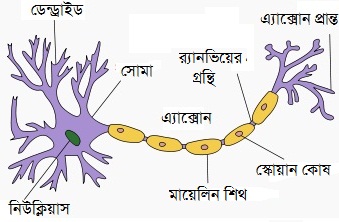
স্নায়ুকোষের এই স্পন্দন এ্যাক্সোনের ভিতর দিয়ে তথ্য সঞ্চালিত হয় এবং সিন্যাপ্সের ভিতর দিয়ে অন্য স্নায়ুকোষে সঞ্চালিত হয়। অন্য স্নায়ুকোষের ডেন্ড্রাইট এই স্পন্দন গ্রহণ করে এবং ওই স্নায়ুকোষের এ্যাক্সোনের ভিতর দিয়ে পরবর্তী স্নায়ুকোষে সঞ্চালিত হয়।
নিউরোনে প্রায় ৭০ মিলিভোল্ট
ঋণাত্মক বিদ্যুৎ সঞ্চিত থাকে। বাইরের কোনো তথ্য ভিতরে প্রবেশ করে বৈদ্যুতিক ধনাত্মক
আধান হিসেবে। নিউরোনে প্রতি সেকেন্ডে প্রায় ১০ কোটি ধনাত্মক আধান প্রবেশ করতে পারে।
একটি নিউরোনে আগত ধনাত্মক আধনের পরিমাণ নিউরোনের ধারণক্ষমতার চেয়ে বেশি হয়ে যায়,
তখন অতিরিক্ত আধান পার্শ্ববর্তী নিউরোনে চলে যায়।
এই প্রক্রিয়া নিউরোন থেকে নিউরোনে তথ্যসঙ্কেত সঞ্চালিত হয়। একবার কোনো তথ্য
সঞ্চালনের কোনো ঘটনা ঘটে, তারপর কয়েক মিলি সেকেন্ড নিউরোন নিষ্ক্রিয় হয়ে যায়। এই
সময় নিউরোন কোনো তথ্য গ্রহণ বা ত্যাগ করে না। ফলে নিউরোনের তথ্য সঞ্চালন ঘটে ছোটো
ছোটো খণ্ডে। বিজ্ঞানীরা মনে করেন, একটি নিউরোন প্রতি সেকেন্ডে ৫-৫০ বার তথ্য
সঞ্চালনে অংশগ্রহণ করতে পারে।
উল্লেখ্য
দুটি
স্নায়ুকোষের ভিতরে
এই ফাঁকা জায়গায় থেকে কিছু রাসায়ানিক দ্রব্য। এই রাসায়নিক দ্রব্যাদির হ্রাস বৃদ্ধির
কারণে মানুষের নানা ধরনের আকাঙ্ক্ষা, বিষণ্নতার সৃষ্টি হয়। এই জাতীয় রাসায়নিক
দ্রব্যাদির ভিতরে রয়েছে সেরোটনিন, এনকেফালিন, গ্লুটামেট, গাবা ইত্যাদি।
মস্তিষ্কের মধ্যে তথ্য আদানপ্রদান, সংরক্ষণ, তথ্যের নানা ধরনের রূপান্তর ইত্যাদি ঘটে রাসায়নিক ও বৈদ্যুতিক প্রক্রিয়ার সমন্বিত দশায়। মূলত প্রতিটি এ্যাক্সোনের প্রান্তীয় অংশে থাকে হাজার খানেক রাসায়নিক দ্রবণের থলি। এদেরকে বলা হয় ভেসিক্লে (vesicle)। আর এর ভিতরের রাসায়নিক দ্রব্যকে বলা হয় নিউরোট্র্যান্সমিটার Neurotransmitter। এই নিউরোট্র্যান্সমিটারগুলোকে বলা যায় রাসায়নিক বার্তাবাহক। এরা তথ্যসঙ্কেতকে এক স্নায়ুকোষ থেকে অন্য স্নায়ুকোষে সঞ্চালিত করে। এছাড়া এদের মাধ্যমে তথ্যসঙ্কেতের মানকে হ্রাসবৃদ্ধি করে। মস্তিষ্কে সাধারণত দুই ধরণের নিউরোট্র্যান্সমিটার বিশেষভাবে সক্রিয় থাকে। এরা হলো- এ্যামিনো এ্যাসিড গ্লুটামেট (amino acids glutamate) এবং গাবা (GABA)। এছাড়া অন্যান্য যে সকল গুরুত্বপূর্ণ নিউরোট্র্যান্সমিটার মস্তিস্কে কাজ করে সেগুলো হলো- এ্যাসিটাইলোকোলোন (acetylcholine), ডোপামাইন (dopamine), এ্যাড্রেনালাইন (adrenaline), হিস্টামাইন (histamine), এ্যাসিটাইলোকোলোন সেরোটোনিন (serotonin) এবং মেলাটোনিন (melatonin) ।
Although the brain continues to grow and develop, the overall number of neurons
and synapses are reduced by up to 50%, removing unnecessary neuronal structures
and allowing them to be replaced by more complex and efficient structures, more
suited to the demands of adulthood.
When stimulated by an electrical pulse, neurotransmitters of various types are
released, and they cross the cell membrane into the synaptic gap between
neurons. These chemicals then bind to chemical receptors in the dendrites of the
receiving (post-synaptic) neuron. In the process, they cause changes in the
permeability of the cell membrane to specific ions, opening up special gates or
channels which let in a flood of charged particles (ions of calcium, sodium,
potassium and chloride). This affects the potential charge of the receiving
neuron, which then starts up a new electrical signal in the receiving neuron.
The whole process takes less than one five-hundredth of a second. In this way, a
message within the brain is converted, as it moves from one neuron to another,
from an electrical signal to a chemical signal and back again, in an ongoing
chain of events which is the basis of all brain activity.
The electro-chemical signal released by a particular neurotransmitter may be
such as to encourage to the receiving cell to also fire, or to inhibit or
prevent it from firing. Different neurotransmitters tend to act as excitatory
(e.g. acetylcholine, glutamate, aspartate, noradrenaline, histamine) or
inhibitory (e.g. GABA, glycine, seratonin), while some (e.g. dopamine) may be
either. Subtle variations in the mechanisms of neurotransmission allow the brain
to respond to the various demands made on it, including the encoding,
consolidation, storage and retrieval of memories.
As has been mentioned, in addition to neurons, the brain contains about an equal
mass of glial cells (neuroglia or simply glia), the most common types being
oligodendrocytes, astrocytes and microglia. Because they are so much smaller
than neurons, there are up to 10 times as many in number, and different areas of
the brain have higher or lower concentrations of glia. It used to be thought
that the role of glial cells was limited to the physical support, nutrition and
repair of the neurons of the central nervous system. However, more recent
research suggests that glia, particularly astrocytes, actually perform a much
more active role in brain communication and neuroplasticity, although the extent
and mechanics of of this role is still uncertain, and a substantial amount of
contemporary brain research is now focused on glials cells.
সূত্র :